Ask any group of primary school children what they think about mathematics, and you will likely hear words like “hard,”“boring,” or “scary.” For decades, traditional education has treated math as a series of rigid drills, rote memorization, and high-pressure timed tests.
But if you watch those exact same children play video games, a strange paradox emerges. They will spend hours trying to crack complex puzzles, calculating inventory weights, and repeating a brutally difficult level fifty times without a single complaint.
Why does a child give up on a ten-question math worksheet after five minutes, but willingly display infinite resilience when trying to beat a video game boss? The answer does not lie in the subject matter. It lies in the neuroscience of human engagement.
The Brain’s Reward Circuit: Dopamine vs. Classroom Boredom
At the center of human motivation sits a powerful chemical messenger: dopamine.
For years, people believed dopamine was only released after you achieved a reward. Modern neuroscience shows that dopamine is actually the neurotransmitter of anticipation and curiosity. It fires when the brain expects a breakthrough, signaling a rush of focus and energy.
Traditional math teaching methods are essentially “dopamine deserts.” When a child faces a flat white worksheet filled with thirty identical arithmetic problems, their brain cannot anticipate a breakthrough. The feedback loop is dangerously delayed—the child writes down answers today, but does not receive a red pen mark or validation from the teacher until tomorrow. Without instant feedback, dopamine drops, attention wanders, and deep cognitive boredom takes over.
Gamified learning completely flips this equation by introducing instant positive reinforcement.
The Anatomy of the “One More Level” Loop
When math practice is built like an open-ended playground, it activates a self-sustaining psychological loop. It uses three critical game mechanics to transform cold numbers into an irresistible quest:
1. Micro-Rewards and Instant Feedback
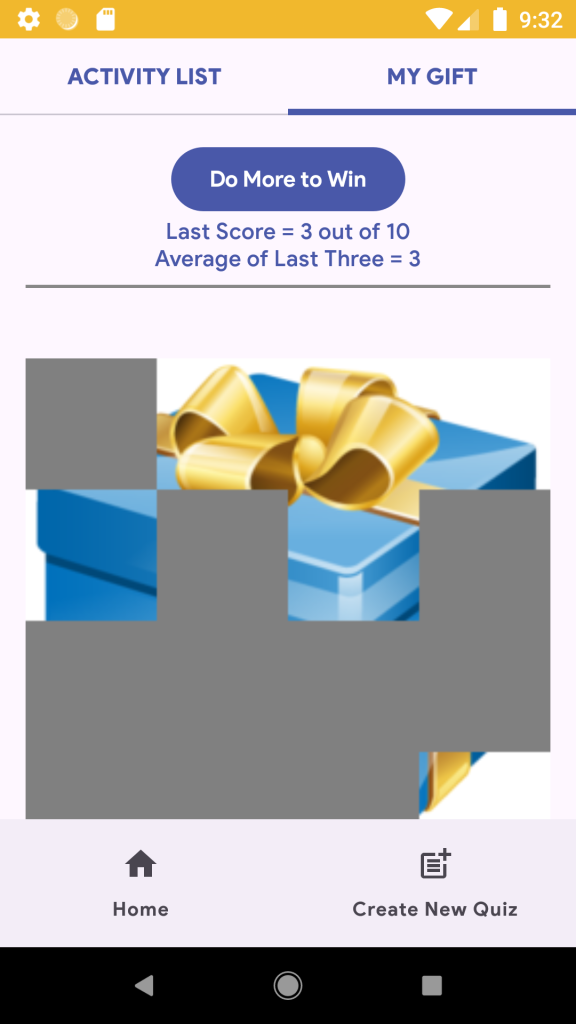
In a gamified environment, every single action triggers an immediate reaction. Correctly group a bundle of tens and ones, and the screen pops with a mechanical bounce, a satisfying chink sound, and an immediate visual token upgrade. The brain receives a tiny hit of dopamine instantly. This instant validation satisfies the brain’s primitive reward center, creating a psychological craving to repeat the action.
2. The Power of Digital Badges
Human beings are hardwired to seek status and collect milestones. In traditional schooling, a child is labeled by a singular final grade at the end of a term. Gamified learning replaces this high-stakes pressure with a universe of multi-tier achievements. A child isn’t just “good” or “bad” at math; they are an “Abacus Apprentice,” a “Time-Keeping Wizard,” or a “Fraction Codebreaker.” Earning a rare, high-contrast digital badge acts as a visible marker of effort, transforming formal schoolwork into personal pride.
3. Striking the “Goldilocks Zone” of Difficulty
Video games are addictive because they practice perfect scaffolding. If a game is too easy, the player gets bored and quits. If it is brutally hard, they get frustrated and walk away. Games succeed by operating continuously in the Zone of Proximal Development—a dynamic “Goldilocks Zone” where the task is just challenging enough to stretch the player’s abilities without breaking their confidence.
How Boldungu Transforms Math into a Playground
This deep understanding of brain science is exactly why we built Boldungu.
Boldungu does not slap a thin layer of cartoons over flat multi-choice test papers. Instead, it re-engineers the entire primary math syllabus—from the Uganda NCDC tracks to international Cambridge standards—into a fully responsive, 3D toy-box learning architecture.
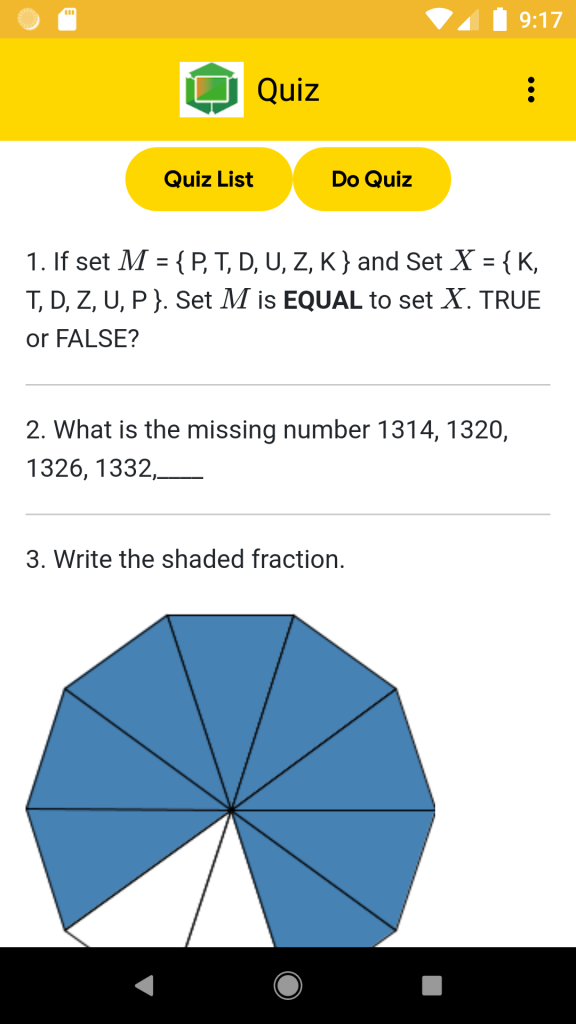
When a learner logs into their unique childhood avatar profile, they enter a structured Quest Map. If they resolve an addition challenge with high accuracy, Boldungu’s smart backend adaptive engine shifts the tracking nodes, introducing slight regrouping variations to expand their capabilities. If they stumble, the engine catches them instantly, serving up simplified concrete visualizations to patch the conceptual leak before their confidence stumbles.
The result? The child does not feel like they are doing formal homework. They feel like they are exploring a map, protecting their achieved gold stars, and racing toward a high score. They fall into the ultimate learning state: the “just one more level” loop.
Cultivating a Lifelong Growth Mindset
The greatest gift of gamified math is not that it helps children pass terminal school exams—though its data tracking structures certainly guarantee that. The real triumph is that it rewires how children view failure.
In a traditional classroom, a wrong answer means a red cross on a page, causing immediate social shame and math anxiety. In Boldungu, a wrong answer simply means your character respawns, the mechanical button resets, and you get to try again. Failure is transformed from a permanent academic judgment into a temporary, playable level obstacle.
By shifting your child’s math routine to an adaptive game engine, you aren’t just protecting their primary school grades. You are teaching their brain to love challenges, embrace resilience, and discover the deep, logical joy hidden inside mathematics.
Turn your family device into an advanced learning laboratory tonight. Search for Boldungu on the Google Play Store, download the app, and watch your child become an autonomous math superstar.


Leave a Reply