Every evening, in millions of households across East Africa and around the globe, a familiar and exhausting battle plays out. A parent sits at a table with a tired primary school child, staring at a page of mathematics homework. For some families, the child completes the page in three minutes flat, completely unchallenged and bored. For others, the session dissolves into tears, frustration, and a crushing sense of defeat because the child cannot even comprehend the very first question.
Both scenarios point to a structural failure in modern education: the rigid, one-size-fits-all school homework pipeline.
When an entire classroom of thirty, forty, or fifty children is assigned the exact same piece of math homework, it assumes every child’s brain is running at the identical cognitive frequency. It forces them into a lockstep march that holds fast learners back and leaves struggling learners stranded.
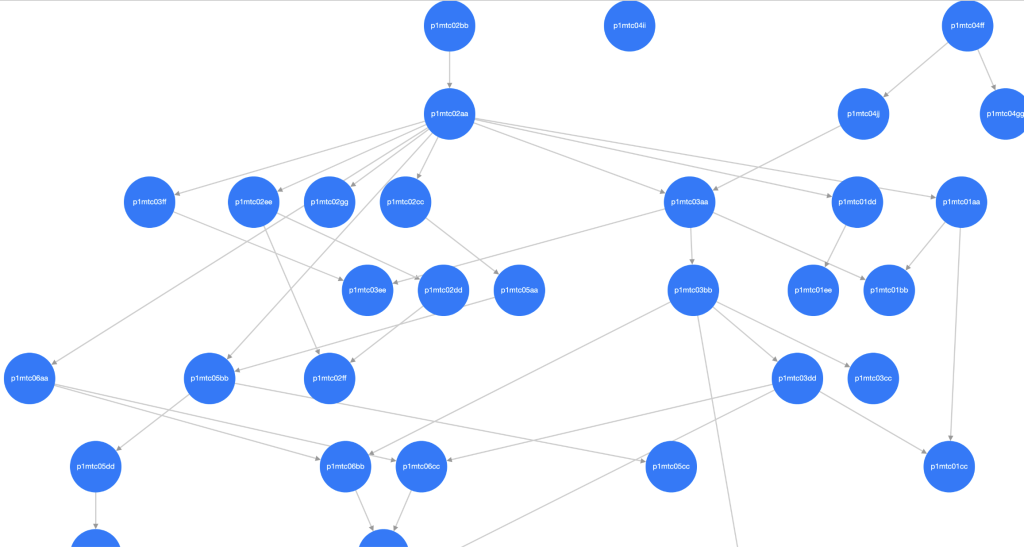
To break this toxic cycle and unlock your child’s true academic potential, we must abandon the rigid assembly-line approach to education and embrace the science of Personalized Progression. Below is a graph behind the Boldungu personalized path for primary one math based on uganda’s national curriculum.
The Tyranny of the Average: Why Fixed Class Assignments Fail
In traditional schooling, lessons are designed for an imaginary “average” student. But in cognitive psychology, there is no such thing as an average brain.
Mathematics is a uniquely cumulative discipline. It is a hierarchical ladder where every single rung depends entirely on the one below it. If a child has not fully mastered Finding Lowest Common Multiple (LCM), they cannot mathematically resolve the Addition of proper fractions with different denominators. If they try, they fail, their confidence shatters, and they assume they are simply “bad at math.”
When a classroom moves forward to a new topic based on a fixed calendar syllabus rather than student mastery, it creates learning gaps. Over a term, these tiny gaps compound into massive learning chasms. A fixed homework pipeline cannot fix this because it looks backward to what the class should be doing, rather than looking at what the individual child can do right now.
Enter Boldungu’s Automated Adaptive Pathing Engine
The best way to get learners focuss is to force them to the direction.
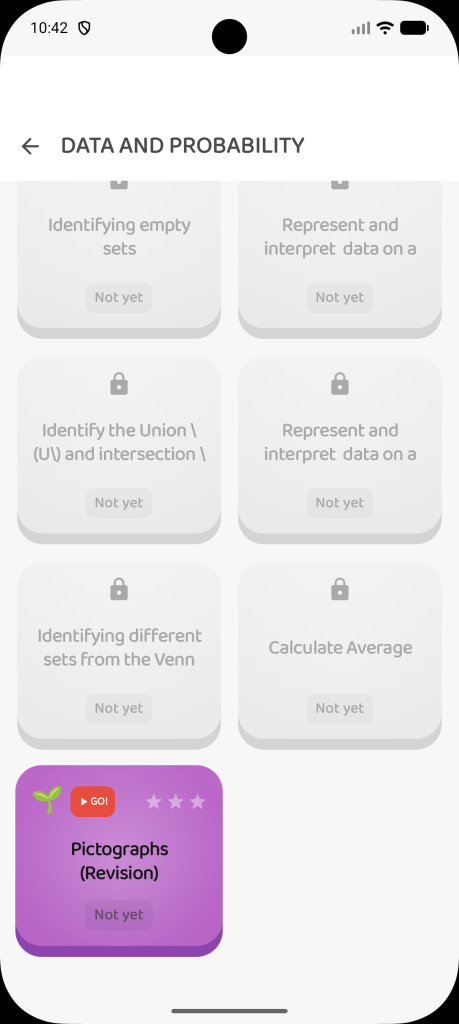
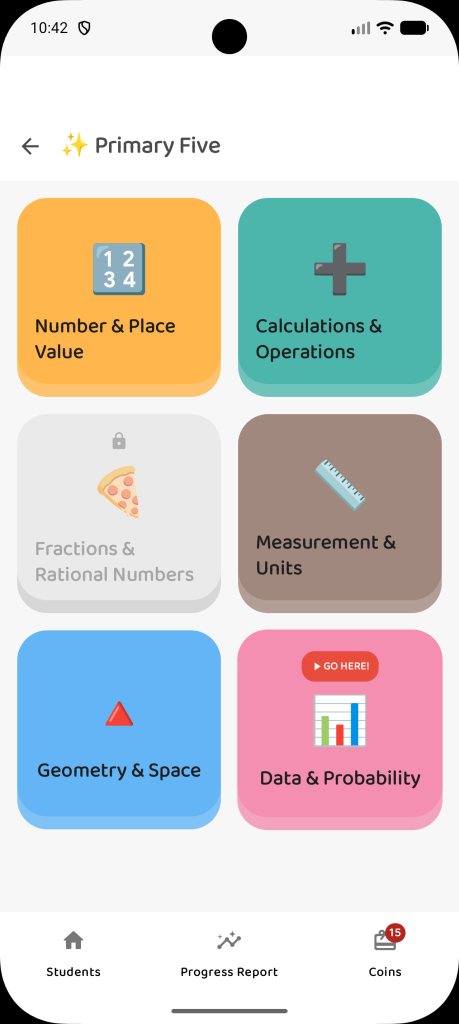
This structural learning roadblock is precisely why we engineered Boldungu.
At the heart of the Boldungu platform is an advanced, automated adaptive pathing engine that completely replaces the rigid homework pipeline. Boldungu doesn’t care what week of the school term it is; it cares exclusively about your child’s unique structural capability limits.
When a child logs into Boldungu, the system acts as an invisible, highly trained private tutor. The engine utilizes our tightly woven curriculum graph networks—spanning everything from national NCDC Primary paths to international Cambridge tracks—to run micro-assessments with every single tap of a button.
- If your child is flying through a module: The adaptive engine detects their high accuracy and immediate speed. It bypasses repetitive, redundant tasks, dynamically opening the next sequential tracking node (like shifting from standard vertical subtraction straight to algebraic missing numbers) to keep their brain stimulated.
- If your child begins to stumble: The engine catches them instantly. Instead of flashes of red marks or punitive failures, Boldungu gracefully scales back the difficulty. It quietly drops down a rung on the prerequisite ladder, serving up concrete 3D abacuses or simpler visual grouping sets to patch the conceptual leak before their confidence takes a hit.
Meeting Kids Exactly at Their Cognitive Boundary
In educational psychology, optimal learning occurs when a task sits right at the edge of a child’s current capabilities—a sweet spot known as the Zone of Proximal Development.
When a task is too easy, the brain switches off. When it is too hard, the brain panics. Boldungu’s engine is constantly calculating this exact boundary in real-time. By keeping your child continuously in this “Goldilocks Zone,” math ceases to be an exhausting chore and transforms into an engaging, achievable challenge.
Furthermore, because Boldungu stores separate data profiles for different siblings on the same shared home device, Kato’s Primary 1 counting trail never interferes with or cross-contaminates Ethan’s Year 5 fractional matrix map. Every child travels along their own isolated, personalized superhighway to mastery.
Give Your Child the Superpower of Self-Paced Mastery
The rigid homework assembly line belongs to a past era of industrial education. Your primary school child deserves a learning framework that respects their unique cognitive pace, celebrates their breakthrough moments, and structurally reinforces their vulnerabilities.
By introducing your family to Boldungu’s personalized progression engine, you are transforming math from a source of evening anxiety into a playground of discovery.
Stop forcing your child into a pipeline that doesn’t fit them. Search for Boldungu on the Google Play Store today, download the app, and let our adaptive quest engine build your mathematical superstar.

Leave a Reply